Terrestrials Primer: Ants, Beetles, Hoppers, and the Other Land-Based Trout Food
Terrestrial insects are land-living bugs that end up in the water by accident -- blown off vegetation, falling from tree canopy, walking onto the surface, getting swept off by current. For inland trout in the SHA region, terrestrials are the summer dry-fly menu that replaces the spring mayfly hatches when those wind down. Ants + beetles + hoppers + occasional cicadas + caterpillars all play.
TL;DR
What "terrestrial" means
In angling vocabulary, "terrestrial" refers to land-based insects that occasionally end up in the water. Aquatic insects (mayflies, caddis, stoneflies, midges) live in the water; terrestrial insects live on land but become trout food when they accidentally land or fall in. The transitional period -- when a terrestrial is on the surface -- is the trout-feeding window.
Terrestrials matter for trout angling because:
- They fill the post-hatch summer window. Once spring mayfly hatches end (June), the trout food supply shifts heavily to terrestrials.
- They are surface-bound. Trout eat terrestrials at the surface; this is dry-fly fishing in its most satisfying form.
- They are predictable. The seasonal calendar + the wind + the canopy + the riparian vegetation all give clues about what terrestrial is in season.
- They drive aggressive strikes. Trout key on terrestrials because the food source is high-calorie + relatively rare; the resulting strikes are often more aggressive than mayfly takes.
Ants
Ants are the most reliable terrestrial across the SHA region. Multiple species of black + cinnamon + carpenter ants drop into streams from overhanging trees throughout the warm months. Patterns + tactics:
- Pattern sizes: 14-20 for inland trout. Size 16-18 covers most situations.
- Colors: black + cinnamon (rust-red) + (occasionally) flying ant patterns with wings.
- Foam vs natural materials: high-floating foam patterns are easier to see and fish; natural-fiber patterns (CDC + biot) are more realistic.
- When: June through October; peak July-August on hot afternoons with afternoon thunderstorms (rain washes ants off vegetation).
- Where: under overhanging trees + bank vegetation + grassy meadow banks.
- Flying ant emergence events: several times per summer, mature ant colonies release winged reproductives. Trout key on flying ants intensely during these events.
Beetles
Beetles include multiple summer species relevant to trout fishing -- Japanese beetles, ground beetles, lady beetles, weevils, and various others. Different species, similar fishing technique:
- Pattern sizes: 12-16 typical; sometimes larger for cicada-overlap patterns.
- Colors: black + green + brown + (for Japanese beetles) iridescent green + copper.
- Patterns: high-floating foam beetles + Crowe beetles + Japanese beetle imitations.
- When: June through September.
- Where: below tree canopy + adjacent to bank-side bushes + along grassy meadow stretches.
- Bobber-strike behavior: beetles often produce hard splashy strikes -- the trout reaches up + intercepts the beetle aggressively.
Hoppers
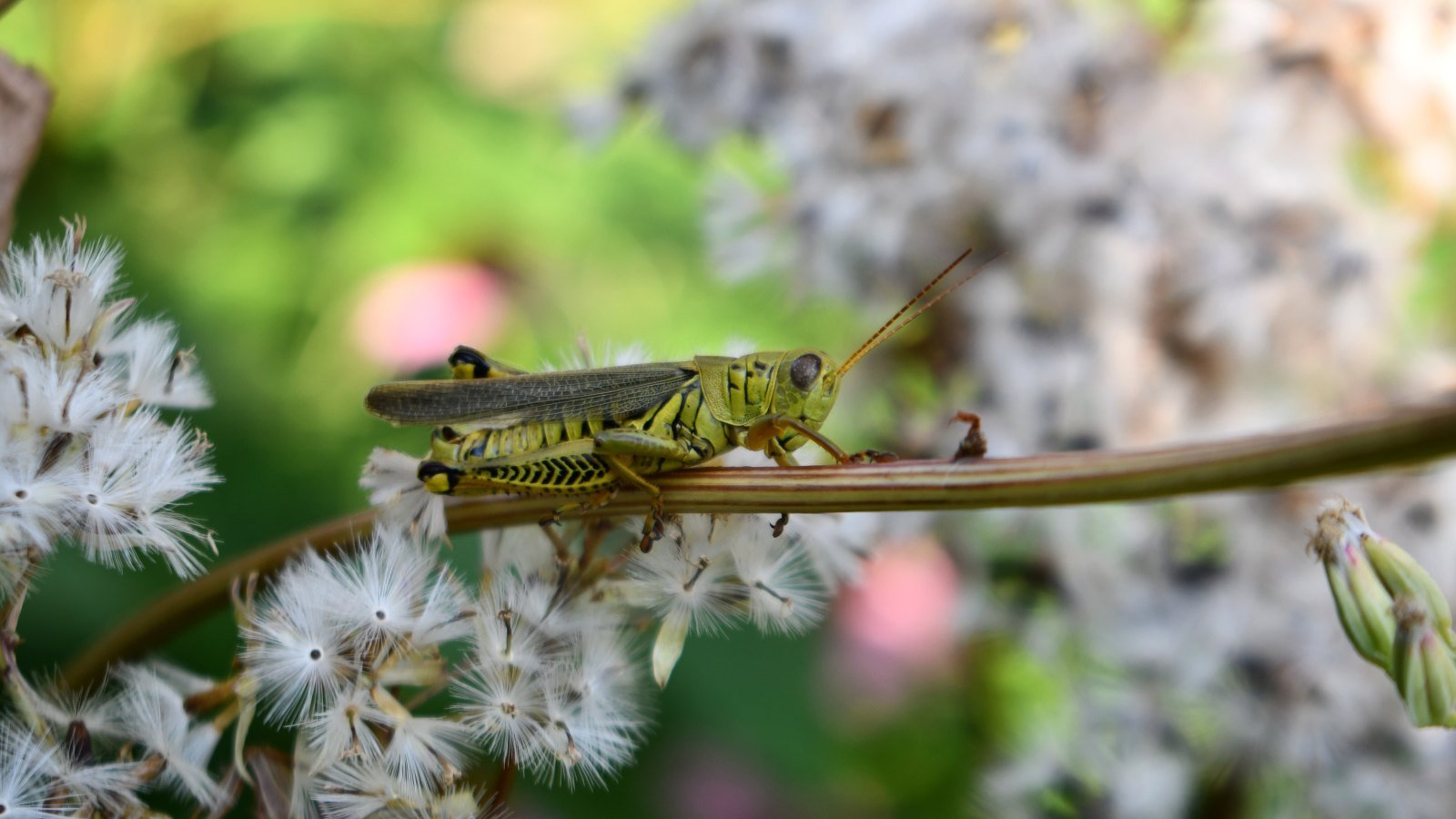
Grasshoppers + crickets are the larger terrestrial category. Peak hopper fishing requires meadow + grassland habitat adjacent to the stream:
- Pattern sizes: 6-12 typical; larger patterns for big-water + big-fish work.
- Colors: tan + olive + yellow + (for crickets) black.
- Patterns: Chubby Chernobyl + Dave's Hopper + Schroeder Parachute Hopper + Letort Hopper.
- When: July through September peak; August is generally the standout month.
- Where: meadow streams + bank-side grassy stretches + wherever wind sweeps grass into the stream.
- Strike behavior: hoppers drive the most aggressive strikes of the terrestrial menu -- big trout commit to large meals.
Cicadas
Cicada emergences are the trump card of terrestrial fishing -- rare, dramatic, and unforgettable. The 17-year + 13-year periodical cicada broods (Magicicada genus) produce massive synchronized emergences across specific geographic regions. Annual cicadas (Tibicen genus) emerge in smaller numbers every summer in most areas.
- Pattern sizes: 4-10; large + heavily-dressed foam patterns.
- Colors: black bodies + orange-red eyes + clear/white wings + occasionally green abdomen.
- When: annual cicadas June-August; periodical broods on their specific multi-year cycle.
- Trump-card behavior: during periodical brood years, ANY trout in the watershed will rise to a cicada pattern. The brood years on relevant SHA-region geography produce trophy-class brown trout on the surface in numbers anglers rarely see.
- Geographic check: consult the USGS Cicada Emergence Map for current-cycle brood timing.
Inchworms + caterpillars
Inchworms (Geometridae) and various caterpillars (Lepidoptera larvae) are the spring + early-summer terrestrial that anglers often miss. Hardwood tree canopy -- oak + maple + birch -- drops inchworms and caterpillars into adjacent streams from late spring through midsummer:
- Pattern sizes: 12-16; inchworms are slender + small, caterpillars more substantial.
- Colors: green + chartreuse + tan.
- When: late May through July peak; varies by tree species.
- Where: directly under tree canopy especially mixed-deciduous reaches.
- Use: often as a dropper below a more visible terrestrial -- inchworm trailing a beetle or hopper.
Seasonal terrestrial calendar
| Window | Primary terrestrials |
|---|---|
| May | Inchworms + caterpillars begin; small ants emerging. |
| June | Inchworms continue; ants increase; first beetles appear. |
| July | Peak ant fishing; beetles strong; first hoppers; annual cicadas; periodical broods on cycle years. |
| August | Peak hopper fishing; ants + beetles continue; periodical broods if on cycle. |
| September | Hoppers continue; ants reduce; beetles continue. |
| October | Reduced terrestrial activity; ants still occasional; first frost ends most activity. |
Honest gaps
- No comprehensive species-level identification of every terrestrial that lands in SHA-region trout streams.
- No coverage of midwest cricket species in detail.
- No periodical cicada current-cycle predictions (consult USGS).
- No coverage of marine + freshwater terrestrial alternatives like spent damselflies.
Full source list
- Tier 3 -- general entomological references (taxonomic + behavioral).
- Tier 3 -- USGS periodical cicada emergence tracking.
- Tier 1 -- state agency hatch + forage reference material (PFBC + ODNR + NYSDEC where published).
Common questions
What's the single most useful terrestrial pattern?
A size 16 black foam ant. Reliable across SHA-region inland trout streams from June through October. Carry several; lose some.
When do hoppers actually start producing?
Mid-July in most SHA-region streams; peak August. Meadow + grassland habitat adjacent to stream is required for serious hopper fishing.
How do I know if periodical cicadas will emerge this year?
Consult the USGS periodical cicada emergence map. Brood emergences are predictable + geographically specific.
Do terrestrials work for stocked rainbow trout?
Yes, although stocked rainbows are less selective than wild brown + brook trout. Terrestrials work; smaller patterns are more reliable for stocked-fish work.
Image credits and licensing
- Inline image: Late-summer trout often learn to watch the bank for grasshoppers and other wind-dropped terrestrials. Photo: U.S. Fish and Wildlife Service Midwest Region, public domain.
- Hero image: Photo: Biggins Dean / USFWS, public domain.
Continue learning
- What is a hatch? -- the aquatic insect framework that terrestrials complement.
- Inland Trout Seasonal Calendar.
- Class A Wild Trout Streams Near the Alley.
- Brook Trout Headwaters.
- Source Discipline + Tier Hierarchy.


