Chasing Steelhead on Ohio's Rocky River: Lessons from the Steelhead Expo
There's a particular kind of optimism that gets an angler out of bed before sunrise in the fall — the kind that ignores cold fingers, slippery rocks, and the very real possibility of coming home empty-handed. For the crew at Skunk'd Outdoors, that optimism led them to the banks of Ohio's Rocky River on a crisp autumn morning, and then through the doors of the Rocky River Nature Center for one of the region's most valuable gatherings for steelhead enthusiasts: the annual Steelhead Expo.
What followed was a day equal parts humbling and educational — a morning of working through crowds and cold water, an afternoon of absorbing expert advice, and a memorable wade through a river that had no intention of making things easy. Here's what they learned, and why it matters for anyone chasing steelhead in Ohio this season.
Reading the Water Before You Even Cast
The morning started with a thermometer dip and a reality check. Just two weeks prior, the water had registered around 70 degrees. On this particular morning, a stretch of cold weather and rain had pushed it down to a much more promising 60 degrees — right in the range that steelhead anglers dream about.
The Rocky River, like many of Ohio's steelhead tributaries, is no secret. Popular stretches can feel more like a parking lot than a fishing destination on a good fall day. The Skunk'd Outdoors team's first move was a familiar one: keep moving until the crowds thin out.
"If you're willing to get a little wet and walk through the woods a little bit, you'll be able to find a spot."
That philosophy paid off when they pushed past a bridge crossing and worked their way through a wooded trail to a stretch that offered something increasingly rare on popular steelhead water — solitude. The spot featured a riffle leading into a slow, deeper section, with clear visibility all the way to the bottom. With the sun breaking through and the river running at 75 cubic feet per second, conditions were fishable, if not exactly explosive. A Tenkara rod rigged with an egg fly and a strike indicator, a nymph-and-egg combo for variety, and a willingness to keep adjusting were the tools of the morning.
Arriving at the Steelhead Expo
After a morning on the water, the crew made their way to the Rocky River Nature Center for the Steelhead Expo — an event organized by the Ohio Basin Steelheaders Club, which Daniel and his fishing partner had just joined. Two seminars were on the agenda: a fly fishing presentation from John of Orvis, and an advanced fall techniques session led by Roger Hinchcliff. Between the two, they walked away with more practical steelhead knowledge than most anglers accumulate in a full season of trial and error.
It's worth noting that the expo also turned into something of an unexpected fan meet-and-greet. Viewers of the Skunk'd Outdoors channel showed up throughout the day to say hello — well into the double digits by final count, to the genuine surprise of the hosts.
"I was very shocked. We had one person right at the beginning, and then they just kept coming."
John from Orvis: How to Read and Cover the River
John's presentation focused on the fundamentals of fly fishing for steelhead — the kind of systematic, observational approach that separates productive anglers from those who cast all day into the wrong water. His talk covered everything from timing your outing to selecting the right fly, and nearly every point was immediately actionable.
Timing Your Trip Around River Flow
John's advice on when to fish centered around water flow following rain events. Rather than chasing the high, muddy water immediately after a storm, he watches for the river to peak and then begin dropping. That downswing — when the river is receding toward fishable levels — can offer some of the best windows of the season. He was careful to note, however, that a gauge number alone doesn't tell the full story. The best indicator is current speed.
"Look for current moving at around walking speed."
That mental benchmark gives anglers a practical, on-the-water way to evaluate whether a stretch is worth fishing without needing to pull up a hydrograph on a phone.
Foam Means Home
One of John's most memorable pieces of advice was deceptively simple: follow the foam. Surface foam gathers where currents converge and slow, concentrating the same drift lanes that carry food to waiting fish. If you can identify where foam collects, you can often identify where steelhead are holding.
"Foam means home."
It's the kind of phrase that sticks — and more importantly, it gives anglers something specific to look for rather than guessing at holding water.
Start Close, Then Work Out
Perhaps the most universally overlooked piece of advice in steelhead fishing — and John made a point of emphasizing it — is to fish the water near your feet before wading in. It's an easy mistake to make: the deeper water out in the middle of the river looks more promising, so anglers wade straight in without considering that fish may already be holding in the shallower water near the bank. Starting close and working progressively further out ensures you're not spooning fish before you've even made a cast.
Fly Selection: Wiggle, Flash, and Contrast
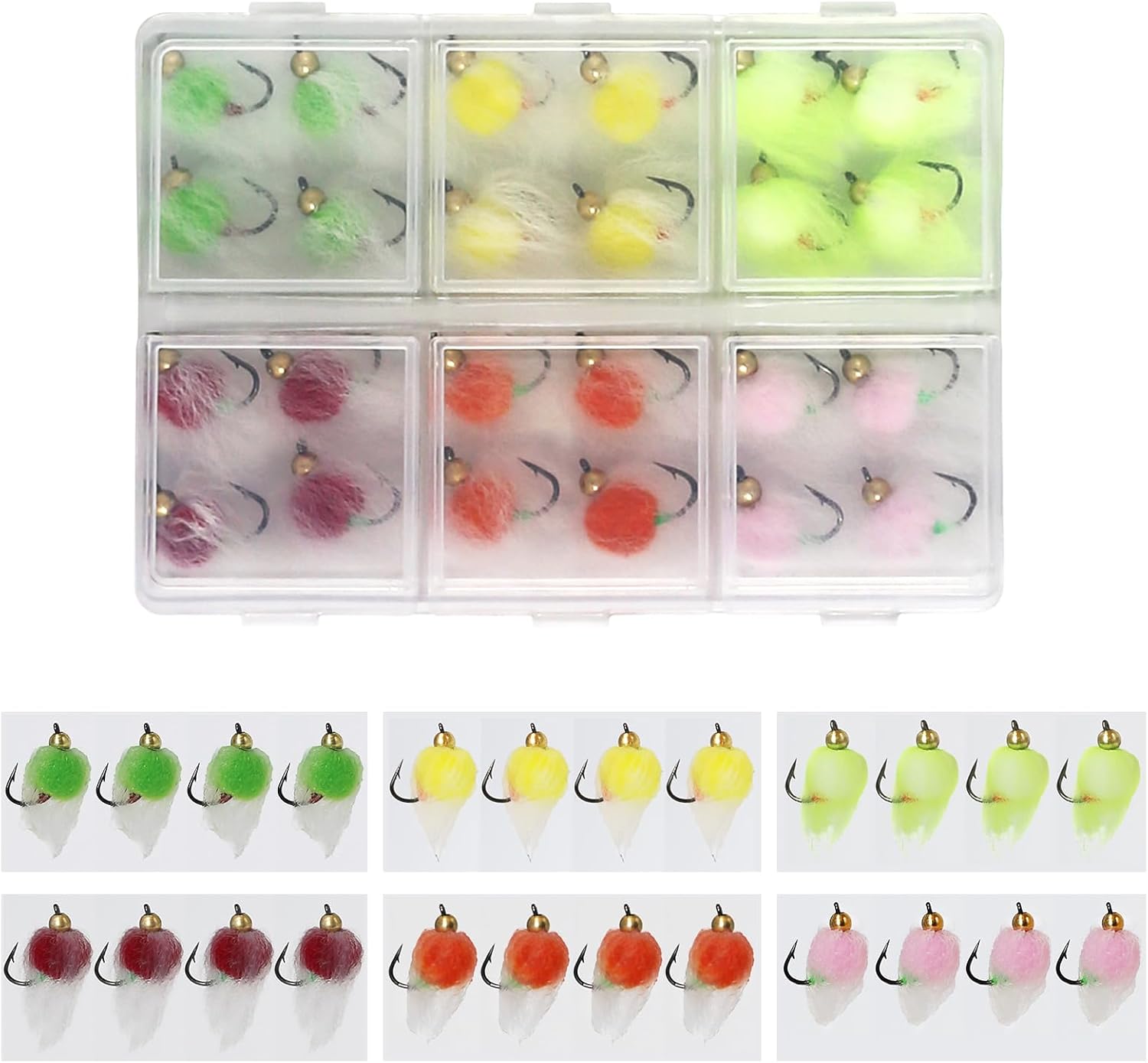
John's framework for choosing steelhead flies came down to three qualities: wiggle, flash, and contrast. For wiggle, he favors materials like rubber legs and marabou that move naturally in the current. Flash draws attention, especially in stained water. Contrast — bright, non-natural colors — helps the fly stand out in a drift lane crowded with natural debris.
On the topic of white patterns, John was particularly enthusiastic, recommending flies like a white crystal fly or white zonker to imitate emerald shiners and other baitfish. Early in the season, when fresh fish are pushing into the system, he leans toward larger and flashier presentations. As the run progresses and fish become more pressured and settled, he scales back toward more natural-looking offerings.
Keep Adjusting
John's final major point was as much a mindset as a technique. If you've covered a piece of water well for 10 to 15 minutes without a response, change something — your fly size, your color, your depth, or the water you're fishing entirely. Persistence without adaptation isn't persistence; it's stubbornness.
A Note on the Cuyahoga River
John closed his talk with an encouraging note about the Cuyahoga River, where steelhead stocking began in 2024. With approximately 43 miles of public fishing access running through the Cuyahoga Valley National Park, it represents a compelling alternative for anglers frustrated by the crowds on the Rocky or the Chagrin. The Cleveland Metroparks app even allows users to check public versus private access points along the river — a small but genuinely useful tool for planning a trip.
Roger Hinchcliff: The Small Details That Change Everything
Where John's presentation focused on reading and covering water effectively, Roger Hinchcliff's advanced fall techniques seminar drilled down into the finer points of presentation — the marginal adjustments that make the difference when fish have seen every trick in the book.
Pressured Fish Have Memory
Roger's central theme was one that every steelhead angler on a popular river needs to internalize: fish that have been pressured get difficult, and they remember. This sets the stage for everything else in his talk. On a river like the Rocky, where fish see hundreds of drifts per day during peak season, the margin for error in your presentation shrinks considerably.
Rod Length and Line Diameter
Roger made the case for longer rods as a tool for controlling drift — the ability to manage line off the water directly translates to how natural your presentation looks to a skeptical fish. On the subject of line, he introduced a nuance that most anglers overlook: two leaders can carry similar breaking strengths while having meaningfully different diameters, and that difference affects how naturally a fly or bait moves through the water column. It reframes the entire question of line selection, moving it beyond simple pound-test comparisons.
Hooks and the Snell Knot
For hooks, Roger prefers a small, light wire hook with a wide gap — a combination that aids in both natural presentation and hookup ratios. His preferred connection is the Snell knot, which orients the hook at an angle he finds more effective when setting into fish. It's a knot that requires practice, especially with cold hands on a river bank, but the rationale behind it is sound enough to make the learning curve worthwhile.
Depth Is Everything
Of all the variables Roger covered, depth may have been the most emphatic. He wants his presentation within several inches of the bottom — what he calls the strike zone. It's a simple concept with a crucial implication: if your drift is passing over the heads of fish, changing fly colors all day accomplishes nothing. The fix isn't in the fly box; it's in the split shot or the float depth.
"If you're in the strike zone a lot, you're also going to get snagged a lot — because you're constantly closer to the bottom."
Roger's point was that snags are a byproduct of fishing correctly, not a sign that something is wrong. Be willing to lose some terminal tackle in exchange for keeping your presentation where the fish actually are.
Fish Don't Wear Sunglasses
Roger saved one of his most memorable lines for the end of his presentation. On bright, sunny days, increased light penetration actually limits how far fish can see — which means a smaller or subtler fly may go undetected. His solution is to increase profile and visibility when conditions are bright, giving fish something they can actually locate.
"Fish don't wear sunglasses."
He extended this logic to color selection in the fall, making a point that resonated strongly: all day long, steelhead in an autumn river are watching red, brown, and yellow leaves drift past them. A fly that matches those colors blends right into the background noise. A fly in blue, chartreuse, or another contrasting color, however, stands out precisely because it's different from everything else the fish has been ignoring for hours.
Back on the Water: Putting the Lessons to Use
After the seminars, the team returned to the Rocky River to scout and fish — armed with new perspective and, in one case, a just-purchased fly tying vise from the expo's vendor area. The river, running clear at 75 cubic feet per second, offered a good look at bottom structure and potential holding water for future trips when levels rise.
Water temperatures in the shallower, sun-exposed stretches near the Nature Center were reading around 64 degrees. Deeper, shaded sections near the Morley Dam held closer to 60 — still solidly within the range where steelhead are active and feeding. The conditions were fishable, if not quite perfect, and the day served as a useful reminder that reconnaissance on low, clear water pays dividends when flows return to more productive levels.
The outing wasn't without incident. A particularly slick stretch of riverbed near a deeper wade-through produced what may generously be described as an involuntary swimming lesson — and a slightly swollen elbow to remember it by. The river, as it tends to do, had the last word.
Key Takeaways for Ohio Steelhead Anglers This Fall
Between the morning on the water and the afternoon in the seminar rooms, the day produced a clear set of lessons worth carrying into every outing this steelhead season. Water temperature remains a critical factor — look for readings in the 55 to 65 degree range as the most productive windows. Flow matters more than gauge numbers alone; walking-speed current and foam lines are your best on-the-water indicators of quality holding water.
On the fly side, prioritize wiggle, flash, and contrast. Fish close before wading deep. Get your presentation to the bottom — and expect to lose some gear in the process, because that means you're doing it right. When fish have seen pressure, go smaller, go lighter, and think carefully about the diameter of your leader rather than just its breaking strength.
And when the leaves are turning and the river is running full of autumn color, throw something blue.
The Ohio Basin Steelheaders Club deserves significant credit for organizing an event that clearly delivers real value to anglers at every level. For those who missed this year's Steelhead Expo, it's worth marking the calendar for next fall — and in the meantime, the Rocky River, the Chagrin, and the increasingly promising Cuyahoga are all waiting.